
Sustainable Development Goals
With our Certification Schemes for food safety and social sustainability, Foundation FSSC contributes to the United Nations Sustainable Development Goals (SGDs). This is also part of our giving back strategy.
With our Certification Schemes for food safety and social sustainability, Foundation FSSC contributes to the United Nations Sustainable Development Goals (SGDs). This is also part of our giving back strategy.
The Sustainable Development Goals (SDGs) are 17 global goals established by the United Nations in 2015 as part of the 2030 Agenda for Sustainable Development. These interconnected goals provide a shared blueprint for peace and prosperity for people and the planet, addressing critical challenges including poverty, inequality, climate change, environmental degradation, peace, and justice.
All 193 UN Member States committed to achieving these ambitious targets by 2030.
Through our FSSC 22000 and FSSC 24000 certification schemes, Foundation FSSC directly contributes to 12 of the 17 UN SDGs, driving measurable impact across the consumer goods industry and related supply chains.
As a member of the United Nations Global Compact Network in the Netherlands, Foundation FSSC is determined to support the UN Global Compact’s universal principles for human rights, labor, the environment, and anti-corruption.
The UN Global Compact is the world’s most significant corporate sustainability initiative, which was mandated by the United Nations to stimulate businesses to support the realization of the UN Sustainable Development Goals (SDGs).
Foundation FSSC strives to help the Global Compact advance these principles through the United Nation’s SDG Framework.
With our certification Schemes for food safety and social sustainability in the consumer goods industry and related supply chain, particular effort contributes towards the realization of the following SDGs:
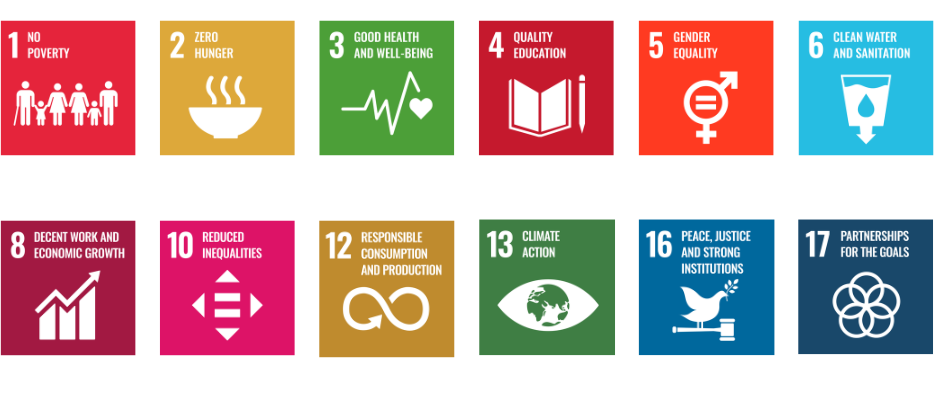
SDG 1: No Poverty – Supporting worker well-being and food security through safe food access and fair labor practices.
SDG 2: Zero Hunger – Ensuring safe and quality food production while reducing food loss and waste along supply chains.
SDG 3: Good Health and Well-Being – Protecting public health through food safety standards and promoting worker health and safety.
SDG 4: Quality Education – Building food safety capacity in low- and middle-income countries and ensuring children complete their education.
SDG 5: Gender Equality – Mandating equal opportunities and treatment in employment regardless of gender.
SDG 6: Clean Water and Sanitation – Providing free potable water and clean toilet facilities for all workers.
SDG 8: Decent Work and Economic Growth – Promoting fair labor practices, safe working conditions, and market access for businesses.
SDG 10: Reduced Inequalities – Eliminating discrimination and promoting inclusion across all personal characteristics.
SDG 12: Responsible Consumption and Production – Advancing sustainable production practices and reducing waste throughout supply chains.
SDG 13: Climate Action – Reducing greenhouse gas emissions through efficient resource management and waste reduction.
SDG 16: Peace, Justice and Strong Institutions – Eliminating child labor and building accountable, ethical organizations.
SDG 17: Partnerships for the Goals – Collaborating with global organizations to advance food safety and social sustainability.
Here’s how our FSSC 22000 and FSSC 24000 Certification Schemes contribute to achieving specific targets within each of the 12 Sustainable Development Goals.
SDG 1 aims to eradicate all forms of poverty, not only the financial aspects but also the impact of poverty on people’s lives. The SDG agenda addresses social protection, equal economic rights, and the resilience of poor and vulnerable groups. Social Sustainability and the FSSC 24000 Scheme for Social Management Systems are the driving forces behind companies investing in the well-being of their employees through a Living Wage system. A Living Wage ensures workers can afford a decent standard of living for themselves and their families and includes food, water, housing, education, health care, transport, clothing, and other essential needs.
Food security through the availability of safer food is also aligned with social responsibility. The FSSC 22000 Scheme and the FSSC 22000 Development Program support the strengthening of food safety management systems for food business operators of all sizes. Safe food ensures that fewer people fall ill, as consuming unsafe food can lead to illness, which in turn results in an inability to work and a loss of income.
The FSSC 22000 Food Safety Management System contributes significantly to ensuring safe and quality food production worldwide. By implementing international food safety standards and practices, FSSC 22000 helps prevent food contamination. It ensures that food products meet high-quality standards, and supports access to safe food for all, including poor and vulnerable populations, as mandated in SDG Target 2.1. Further, FSSC 22000 is crucial for developing sustainable food production systems that help enhance food security. Through efficient resource management and food loss and waste reduction measures in food production processes, FSSC 22000 helps increase productivity and production of safe food while building more sustainable and resilient food systems. These measures directly address SDG Target 2.4.
Every day, billions of people rely on those who grow, process, package, distribute, and prepare food to do so safely. This trust is well-placed because food producers worldwide follow established food safety practices defined in international standards and food safety management systems (FSMS). FSSC 22000 is our FSMS, and it supports public health by identifying and reducing the risks that come with unsafe food, directly addressing SDG Target 3.3.
The FSSC 24000 Social Management System supports worker health and well-being across the consumer goods industry. It does this by eliminating forced and child labor, providing a living wage, ensuring safe working conditions, preventing overwork, promoting good labor relationships, and upholding ethical business practices. This continuous improvement approach directly addresses SDG Target 3.9, which aims to substantially reduce deaths and illnesses caused by hazardous chemicals and pollution by 2030. In practice, this means ensuring all workers have access to free potable water and clean toilet facilities, reducing health risks linked to unsafe water and poor sanitation.
n 2022, Foundation FSSC partnered with UNIDO to strengthen food safety in low- and middle-income countries (LMICs) through capacity-building activities. These efforts build food safety knowledge at multiple levels and support safe food production across the supply chain. For example, a Training of Trainers program in Ethiopia equipped 22 experts to train local institutes and cooperative members in producing safe moringa products.
In Mongolia, training sessions under the World Bank-funded Export Development Project improved export competitiveness for small and medium agribusinesses in the vegetable supply chain. In Egypt, the establishment of a Tomato Learning and Service Center (TLSC) supports inclusive growth within the tomato value chain by improving food safety practices and opening access to international markets. Through these and future UNIDO activities, FSSC continues to provide funding and knowledge resources to build food safety capacity in LMICs, directly addressing SDG Target 4.c.
Our FSSC 24000 Social Management System contributes to SDG Target 4.1, which aims to ensure all children complete free, quality primary and secondary education by 2030. The Scheme requires organizations to comply with minimum working age rules, which must be no lower than the age at which compulsory education ends. This keeps children in school through the completion of their education, supporting better learning outcomes.
Gender equality is a fundamental human right and a cornerstone of global peace and prosperity. FSSC 24000 requires Certified Organizations to uphold equal opportunities and treatment in employment and occupation. This applies to all workers, including temporary and part-time workers and contractors, who must not face discrimination in recruitment or employment practices.
By enforcing these requirements, FSSC 24000 promotes gender equality in the workplace, supports the full participation of women, and ensures equal access to leadership opportunities at all levels, directly addressing SDG 5 Gender Equality targets 5.3 and 5.5.
FSSC 24000 requires Certified Organizations to provide free potable water and clean toilet facilities for all workers. This directly supports SDG Target 6.1, which calls for universal and equitable access to safe and affordable drinking water and sanitation for all.
FSSC 22000 supports Decent Work and Economic Growth in three ways. First, it helps businesses access global markets, grow their customer base, and increase exports by meeting international food safety standards.
Second, it improves efficiency in safe food production, helping organizations reduce costs and strengthen competitiveness.
Third, it builds consumer trust in food safety and quality, helping businesses maintain and expand their market presence. Together, these contributions directly address SDG Target 8.2.
Through FSSC 24000, Foundation FSSC addresses human rights challenges in the consumer goods industry by improving labor relationships, promoting health and safety at work, upholding ethical standards, and reducing inequalities across sectors. These measures directly address SDG Targets 8.5, 8.7, and 8.8.
Through FSSC 24000, Foundation FSSC requires equal opportunities and treatment in employment and prohibits discrimination based on personal characteristics unrelated to job performance. This supports the inclusion of all workers, regardless of age, sex, disability, race, ethnicity, origin, religion, or economic status. By eliminating discriminatory policies and practices, FSSC 24000 directly addresses SDG Targets 10.2 and 10.3.
FSSC 24000 also promotes fair labor practices and supports policies that advance greater equality. These include fiscal, wage, and social protection policies.
Through the FSSC 22000 Certification Scheme, the Foundation addresses the challenge of maintaining food safety while reducing food loss and waste along production and supply chains. These measures directly address SDG Targets 12.2 and 12.3.
The social management system under our FSSC 24000 Scheme ensures Certified Organizations adhere to social responsibility standards. The Scheme upholds fair labor practices, including safe working conditions, equitable treatment of workers, and respect for human rights, nurturing a culture of socially responsible production and consumption. Through its focus on transparency and accountability, FSSC 24000 helps businesses establish mechanisms for monitoring and improving their social performance, driving positive change towards more sustainable and ethical consumption and production practices. These measures directly address SDG Targets 12.3 and 12.6.
FSSC 22000 requires Certified Organizations to manage resources efficiently and reduce food loss and waste. These practices help the consumer goods industry lower greenhouse gas emissions and reduce its impact on climate change, directly addressing SDG Target 13.3.
FSSC 24000 requires the elimination of child labor across the consumer goods industry, supporting the end of abuse, exploitation, trafficking, and all forms of violence against children, as outlined in SDG Target 16.2. This reflects our commitment to building accountable and inclusive organizations where the rights of all individuals, including children, are respected and protected.
Achieving impact means working closely with our partners and stakeholders. These include the Consumer Goods Forum’s Global Food Safety Initiative (GFSI) and Sustainable Supply Chain Initiative (SSCI), the International Accreditation Forum (IAF), Certification and Accreditation Bodies, corporate players in the consumer goods industry and related supply chain, the United Nations Industrial Development Organization, and the UN Global Compact network, among others.
Collaboration with our partners and stakeholders motivates the continuous improvement of our certification Schemes and a dedicated support system beyond certification.