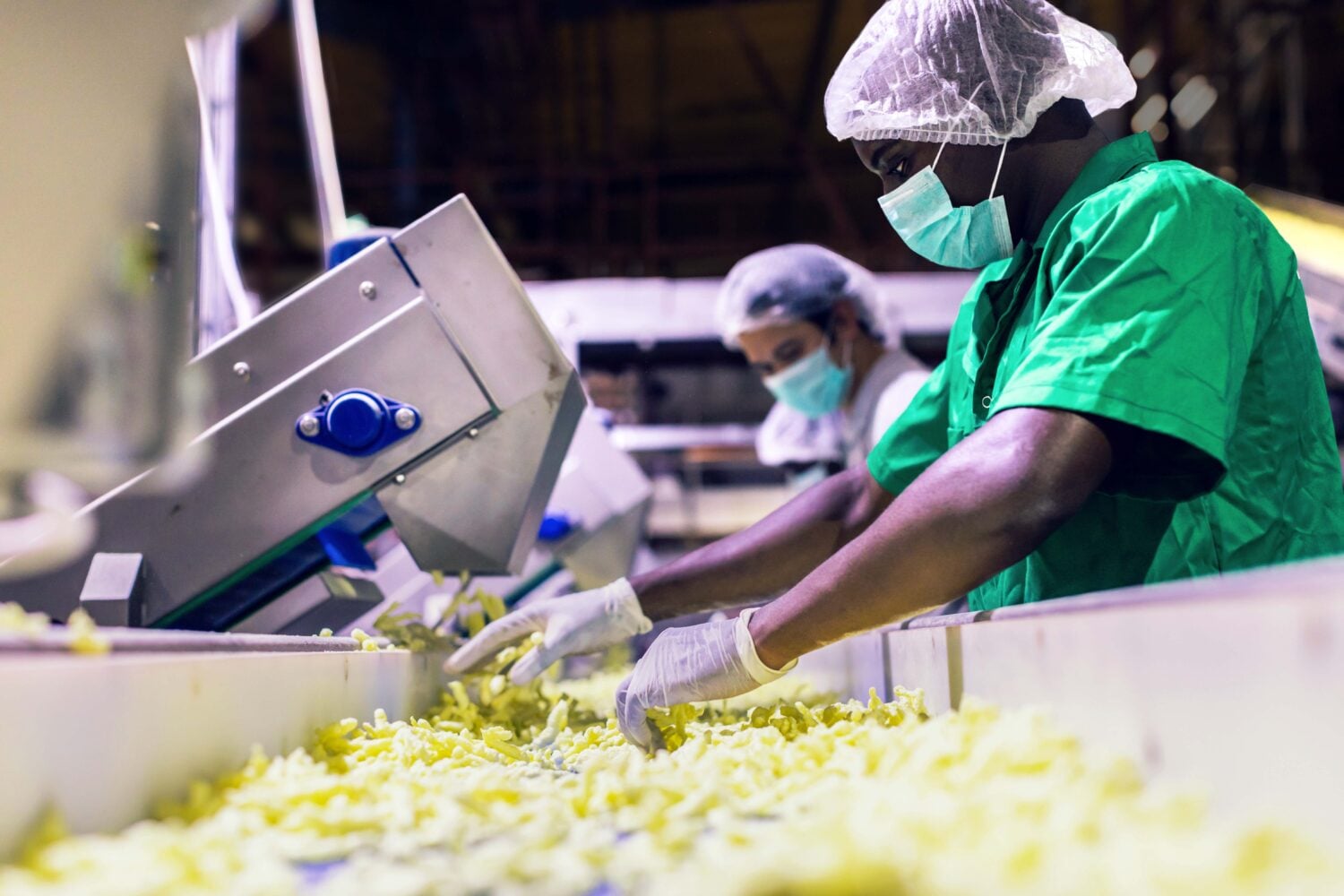
This article outlines what a Food Safety Management System consists of. It focuses on the core elements of FSMS: its importance and benefits, and the steps to Implementing an FSMS.

What is a Food Safety Management System (FSMS)?
A Food Safety Management System (FSMS) delivers a structured framework for organizations in the food sector with a core purpose of ensuring food safety at every level of production, from raw materials to final consumer delivery, while maintaining regulatory compliance and protecting public health. It is a pre-emptive approach to mitigate risks in the food supply chain through various policies, processes and procedures to control food safety hazards.
FSSC 22000 is a complete Certification Scheme for Food Safety Management Systems that incorporates the requirements of the international standard ISO 22000, the technical specifications for sector-specific Pre-Requisite Programs (PRPs), and FSSC 22000 Scheme Requirements (including Part 2 Additional Requirements, Board of Stakeholders Decision List, and Scheme Interpretation Articles)
Core Elements of a Food Safety Management System
Hazard Analysis and Critical Control Points (HACCP)
HACCP is a systematic preventive approach that helps identify, assess, and control biological, chemical, and physical hazards in food production. It has 7 core principles:
- Hazard Analysis: Conducting a hazard analysis to identify and assess potential biological, chemical, or physical risks in the process.
- Critical Control Points (CCPs): A critical control point is a step at which control can be applied and is essential to prevent or eliminate a food safety hazard
- Critical Limits: Each control measure associated with a CCP must have an associated critical limit that separates the acceptable from the unacceptable control parameter, such as maximum temperature
- Monitoring Procedures: Monitoring is the scheduled measurement or observation at a CCP to assess that it is within the critical limit
- Corrective Actions: Establish corrective actions for deviations from an established critical limit
- Verification procedures: Implement verification procedures, including audits and calibrations, to confirm the system’s effectiveness
- Record – Keeping: Maintain records concerning all procedures and records appropriate to these principles and their application
What are Prerequisite Programs (PRPs)?
Prerequisite Programs (PRPs) are basic programs and practices that establish and maintain a hygienic environment for the processing and handling of food.
They include cleaning and sanitation programs, maintenance and calibration programs, food safety inspections, pest control programs, cross-contamination prevention procedures, and recall and traceability programs.
PRPs act as foundational blocks for the development and implementation of effective HACCP systems.
Documentation and Record Keeping for FSMS
Maintaining detailed records is crucial for ensuring traceability, accountability and compliance for effective food safety management. These records serve as tangible proof that food safety controls are in place and functioning as intended. Some of the key documents are:
- Food Safety Policies: Written protocols that ensure the safe production, handling, and distribution of food products detailing processes, procedures, and compliance. They outline the Standard Operating Procedures.
- Monitoring Records: Daily logs capturing real-time data such as temperature checks, sanitation verifications, or equipment readings, with dates, values, and signatures.
- Corrective Actions Logs: These track deviations, corrective measures taken, root cause analysis, and preventive measures.
Management Commitment and Food Safety Culture
Food safety culture must trickle from top down through clear direction, strategic planning, resource allocation and fostering a culture of safety and accountability.
The objectives need to be well integrated in the broader organizational strategy and adequate resources, including infrastructure. Training should be provided to personnel for the effective implementation of an FSMS.
Leadership must build a safety-first culture through visible commitment, transparency in communication, recognition of achievements, and empowering employees to address food safety concerns directly.
Why Are Food Safety Management Systems Important?
FSMSs are pertinent for businesses because they ensure compliance with regulations like HACCP/ISO 22000, safeguarding public health by controlling hazards, thereby ensuring business sustainability.
They minimize food recalls and legal liabilities, enhance operational efficiency and risk management. This results in improved market access through global certifications.
Internationally Recognized Food Safety Standards
ISO 22000
ISO 22000 is an international standard that specifies the requirements for a food safety management system (FSMS). By including interactive communication, system management, and prerequisite programs (PRPs), it ensures that organizations in the food chain can consistently provide safe products.
The standard integrates the principles of the Hazard Analysis and Critical Control Point (HACCP) system with PRPs. It follows ISO’s Annex SL high-level structure, enabling seamless integration with standards like ISO 9001 or ISO 14001, using the PDCA (Plan-Do-Check-Act) cycle across clauses on context, leadership, planning, support, operation, performance evaluation, and improvement.
ISO 22000 is applicable to all organizations in the food chain, including primary producers and food manufacturers, transport and storage operators, caterers, retailers, and even subcontractors.
FSSC 22000
FSSC 22000 is a complete Certification Scheme for Food Safety Management Systems built upon the international ISO 22000 standard, the technical specifications for sector-specific Pre-Requisite Programs (PRPs), and FSSC 22000 Scheme Requirements (including Part 2 Additional Requirements, BoS Decision List, and Scheme Interpretation Articles)
FSSC 22000 is recognized by the Global Food Safety Initiative (GFSI) against their Benchmarking Requirements v2020 and has a global acceptance from over 40,000 organizations worldwide.
You can find a list of FSSC-licensed Certification Bodies on our website by clicking on the Public Register
Key Benefits of Implementing a Food Safety Management System
Consumer Protection
Food Safety Management Systems are designed primarily to protect public health by identifying and mitigating biological, chemical, and physical hazards at every stage of the food supply chain.
Effective implementation can be achieved via monitoring, setting critical limits, and taking corrective actions, thereby reducing foodborne illnesses and contamination.
Regulatory Compliance
An FSMS provides an organized framework for maintaining food safety practices aligned with regulatory requirements by embedding hazard controls, traceability, and verification. The use of standardized processes, such as PRPs and HACCP, ensures compliance.
Market Access and Business Advantages
Implementing food safety certifications offers significant advantages by providing a competitive edge. Organizations demonstrate a commitment to food safety, which gives them an advantage over competitors. In today’s market, consumers are more likely to choose products from certified organizations, knowing that they meet stringent food safety standards.
Many retailers, distributors, and food service providers mandate their suppliers to hold GFSI-recognized certificates as a prerequisite for doing business. By obtaining these certifications, organizations can expand their customer base, enter new markets, and strengthen their relationships with existing partners.
Certifications serve as visible proof that an organization is dedicated to producing safe and high-quality food products. This enhances brand credibility, builds consumer confidence, resulting in increased customer loyalty and repeat business.
It serves as a framework for operational excellence by establishing standardized processes that can streamline operations, reduce waste, and minimize the risk of errors. This not only enhances productivity but also reduces costs associated with recalls, legal actions, and reputational damage.
Continuous Improvement
An FSMS requires organizations to have a robust internal audit program that aligns with the concept of continuous improvement and follows the Plan-Do-Check-Act cycle.
The only way to verify that all the requirements have been effectively implemented, all training is being delivered, understood, and followed correctly by all employees, is through conducting an internal audit.
The PDCA Cycle involves 4 phases:
Plan: Identify a problem, analyze its causes, and develop a strategy for improvement
Do: Implement the proposed changes on a small scale to test their effectiveness
Check: Evaluate the results and measure effectiveness against expected outcomes
Act: Standardize successful changes and adjust the remaining before full implementation
Following these steps diligently and continuously, organizations can enhance efficiency, reduce waste, and foster a culture of ongoing improvement.
Implementing a Food Safety Management System
There are 5 fundamental steps to guide you through the implementation process:
- Gap Analysis and Planning
- System Development
- Training and Communication
- Internal Audits and Management Review, and finally
- Certification Process
Gap Analysis and Planning
Identify and compare the level of compliance of existing systems against the requirements of an FSMS. Identify food safety hazards such as detecting food handling practices not being followed, improper storage and poor sanitation. Senior management must commit financial budgets for training, infrastructure upgrades and documentation systems.
A project plan with clear timelines and goals should be set: 1-2 months for team formation and gap analysis, 3-6 months for PRPs and HACCP development, 1-2 months for validation/training, followed by a 3-month trial period before full audits and certification.
A dedicated cross-functional team should be formed with clearly defined roles led by a designated FSMS Team Leader across departments such as operations, quality, maintenance, HR, and production to cover all processes.
System Development
A significant part of a well-developed and documented food safety management system (FSMS) involves the creation of detailed written food safety policies for employees, setting measurable objectives and compliance standards.
This policy guides all FSMS procedures, with implementation and communication managed by a specialized food safety team.
There should be mandatory procedures for documentation, emergencies, nonconformities, audits, and recalls, plus standard operating procedures. Identify and evaluate hazards by severity of health effects and likelihood of occurrence, using relevant data. Determine acceptable levels based on regulations, customer needs, and intended use and select control measures accordingly.
For each hazard that needs to be controlled, Critical Control Points (CCPs) shall be identified. This is a pertinent step in the process of manufacturing or preparing food wherein the right procedure can minimize or remove a potential health hazard such as a food-borne illness. Complete and accurate identification of CCPs is fundamental to controlling food safety hazards.
A monitoring system shall be established for each CCP to demonstrate that it’s in control and to produce an accurate record for future use when verification is required. The monitoring methods and frequency shall be capable of determining when the critical limits have been exceeded, in time for the product to be isolated before it is used or consumed.
Training and Communication
Training and communication are essential for embedding FSMS principles across all levels, ensuring everyone understands their role in maintaining food safety. Effective programs build commitment from top management down to operators, fostering a culture of compliance and vigilance.
Organizations must train top management, middle managers, and junior staff on FSMS standards like ISO 22000 and HACCP to create an implementation-ready environment.
To sustain the FSMS, all personnel should undergo role-specific training on hazards, hygiene, and emergency response. Establish procedures for internal communication through meetings, toolbox talks and emails, ensuring a culture where issues are promptly reported and addressed. It is crucial that all personnel understand how their activities contribute to food safety through awareness sessions and feedback channels.
Internal Audits and Management Review
Internal audits verify that your FSMS is effectively implemented and complies with stipulated requirements. The internal audit procedure addresses audit program planning, auditor selection and qualification criteria, audit conduct and reporting, and follow-up on findings. Regular internal audits identify gaps before external auditors or regulatory inspectors find them.
Management must review the performance of the Food Safety Management System (FSMS) at planned intervals to ensure its continuing suitability, adequacy, and effectiveness. Reviews must be based on objective evidence and focus on opportunities for improvement and resource needs. An action plan should be developed to meet any need for changes or updates to the FSMS following the meeting.
Management reviews evaluate performance against established food safety objectives and the efficacy of any corrective actions. It focuses on the reliability of pre-requisite programs and validation of the Food Safety Plan.
Certification Process
After FSMS implementation, certification confirms compliance with standards like ISO 22000 through a structured audit process by an accredited body.
- Selecting a Certification Body: Choose an accredited body based on reputation, experience in your sector, auditor expertise, cost transparency, and geographic availability.
- Stage 1 Audit – Documentation review: It assesses that the client’s food safety management system conforms with all the requirements of the ISO 22000:2005 standard, is capable to manage compliance with statutory, regulatory and contractual requirements; and confirms the planned arrangements for the Stage 2 audit.
- Stage 2 Audit – On-site verification: The Certification Audit shall be conducted within a maximum of 6 months of the 1st stage audit. It confirms conformity evidence against the ISO 22000:2005 requirements, assesses key processes including PRPs, HACCP plans, and personnel competency. It ensures the system effectively achieves the client’s stated food safety policies and objectives.
To maintain certification, conduct annual surveillance audits within the calendar year from the certification decision date. Address any non-conformities promptly, update the FSMS for changes, and retain records for continuous improvement.
The recertification audit should be conducted in the same manner as the initial one: within 3 years, but before the expiry of certification.
Looking for something more sector-specific? Read this article on Food Safety Management Systems for the Food Sector.
Conclusion
A Food Safety Management System (FSMS) is a structured and proactive way to identify, control, and continually reduce food safety risks across the entire food chain. It integrates hazard analysis, controls, monitoring, verification, and improvement into a single, coherent system rather than relying on ad‑hoc checks.
Whether an organization pursues ISO 22000, FSSC 22000, or another recognized Scheme, a well‑implemented FSMS helps to protect consumers from foodborne hazards, demonstrate and maintain legal and regulatory compliance, and support stronger business performance through fewer incidents, less waste, and greater customer trust.
Companies should view their Food Safety Management System not just as a regulatory requirement but as a key part of their operations and business strategy. The benefits of a successful FSMS extend far beyond compliance, offering significant contributions to a company’s bottom line and long-term success.