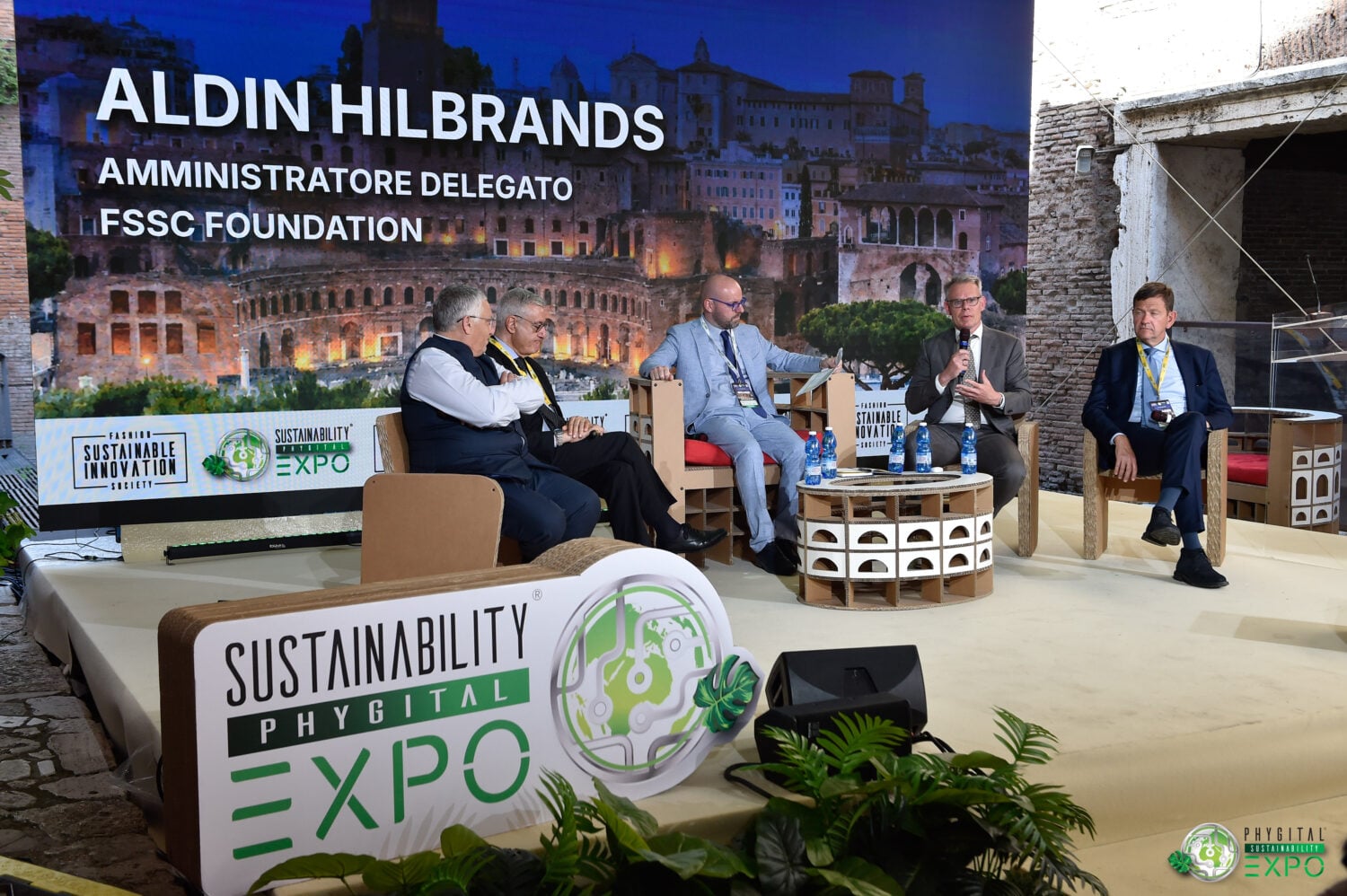
The article focuses on the auditor shortage and industry-wide collaboration as a solution.

Collaboration: The Answer to the Auditor Shortage?
A phrase that came up more than once at the 2026 Insights Event is worth taking seriously: food safety is not competitive.
The auditor shortage is a real concern, with 77% seeing it as a future risk. Issues include an aging workforce, complex qualifications, heavy reporting, and fewer candidates willing to trade consulting flexibility for audits.
Competition is not only unhelpful but also contributes to the problem. The key issue is how to attract, develop, and retain the auditors the industry requires.
The scale of the shortage
At the 2026 Insights Event, a panel of Certification Body leaders shifted the conversation from issues to practical solutions. Patricia Artiaga (Food Accreditation Manager, Bureau Veritas), Todd Redwood (Global Managing Director, Consumer Retail and Food, BSI), and Kimberly Coffin (Technical Director of Supply Chain Assurance, LRQA) each shared an initiative their organization has implemented or tested. Although their approaches vary significantly, they share a common focus: treating the auditor as a long-term asset rather than merely a resource.
Audience polls highlighted issues such as auditor overload, burnout, complex qualification processes, and the burden of self-funding training and maintaining credentials. These longstanding problems were also noted at the 2023 Insights event.
What has changed is the willingness to act and, increasingly, the willingness to act together.
Three initiatives, one instinct
The three Certification Body leaders each offered notably different solutions to the same issue.
- Patricia Artiaga described a pre-screening hub that centralizes qualification expertise across approximately 80 country offices.
- Kimberly Coffin described a Global Auditor Academy that recruits internally and externally, targets a younger demographic, and places participants on a salary within a structured two-year development program.
- Todd Redwood described an industry-funded internship program developed in collaboration with the Australian Institute of Food Science and Technology and eight partner organizations.
The initiatives appear different on paper, but it’s fascinating how each was developed.
From the start, the BSI internship was deliberately not a typical program. Todd emphasized in 2018 that it should not focus on recruiting auditors for a specific certification body. After Australian federal funding stopped, the program continued thanks to eight partners—including competing Certification Bodies, manufacturers, retailers, academia, and government—who contributed financially. When Todd learned Bureau Veritas was developing a similar idea, he visited Paris, shared all documentation, and offered the program. His reasoning: if it succeeded once, it could be replicated, benefiting the industry more than any single organization safeguarding a template.
Bureau Veritas’s pre-screening hub is internal, but Patricia said its principles, competent screeners, digital tools, and a transparent workflow apply to any Certification Body.
LRQA’s academy challenges the pattern in which Certification Bodies train auditors who leave for freelance roles or other organizations after qualifying. Although LRQA has a clawback agreement, it targets professionals in their thirties and early forties with 10-15 years of experience, rather than those starting audit work in their late forties or fifties. This aims to break the cycle Kimberly described as “where you go to retire” in auditing.
Three different mechanisms. One shared instinct: the auditor shortage will not be solved by any single organization acting alone.
The audience perspective
A poll asked the audience about the industry’s preferred investments for the next two to three years. The leading responses focused on developing smarter qualification pathways and redefining the auditor role. Both initiatives are naturally collaborative and cannot be achieved by a single Certification Body.
Kimberly pointed out that auditors face redundant qualification requirements across various GFSI Schemes, with different assessments for the same skills. These duplicate checks are not targeted for elimination and waste time that could be better spent on essential skills like critical thinking, analysis, and communication.
Todd highlighted the reporting burden caused by rising administrative overhead. Digital tools and AI help, but no single Certification Body can develop them alone; collaboration is essential.
The industry must acknowledge that talent development is a shared challenge and that collaborative action is feasible with sufficient willingness.
Todd highlighted the ‘accidental auditor’—people often enter food safety auditing after years in industry, not by design. To attract more people to the field, the industry must promote this career path earlier by partnering with universities, professional groups, and industry partners, not just through internal recruiting.
The harder question
Collaboration is easier to endorse than practice. Certification Bodies have commercial interests to protect, and participants value a well-trained auditor. Initiatives succeed not by resolving tensions but by participants choosing to work through them.
This is a leadership decision, not a structural one. Certification Body leaders should invest resources early, share knowledge voluntarily even if not required, and accept that some auditors may leave. This benefits the food safety industry by expanding the pool of available auditors.
The Future Direction
The closing remarks repeatedly emphasized “together.” The commitments to continue the strategy, involve Certification and Accreditation Bodies, and turn conversations into action are meaningful only if they reflect the collaborative spirit shown by the auditor panel. The three initiatives are not the answer to auditor scarcity, but they are a model for how it will be addressed: gradually, through organizations sharing successes and failures. Auditor scarcity isn’t a competitive problem and won’t be fixed by any single organization.
Todd’s closing summary of his session was the clearest. When asked how to replicate the internship program, he replied, “Contact me.”
That is what collaboration looks like when it is real.